Austin & Travis County
Austin Foundation Repair for Raised Floors and Slabs
Austin houses stand on two kinds of ground and two kinds of foundation. A 1940s cottage on piers and a 2005 slab on black clay crack for different reasons, so the foundation repair, and the bill, differ too. Start with what you can see; this site sorts out the rest.
Foundation repair in Austin usually means one of three jobs: re-leveling a pier and beam house, lifting a settled section of slab on new piers, or sealing cracks. Fixr's 2026 guide puts most projects at $2,200–$8,200, pier and beam repairs at $2,000–$15,000 and slab repairs at $1,000–$10,000. These are national ranges, not Austin quotes.
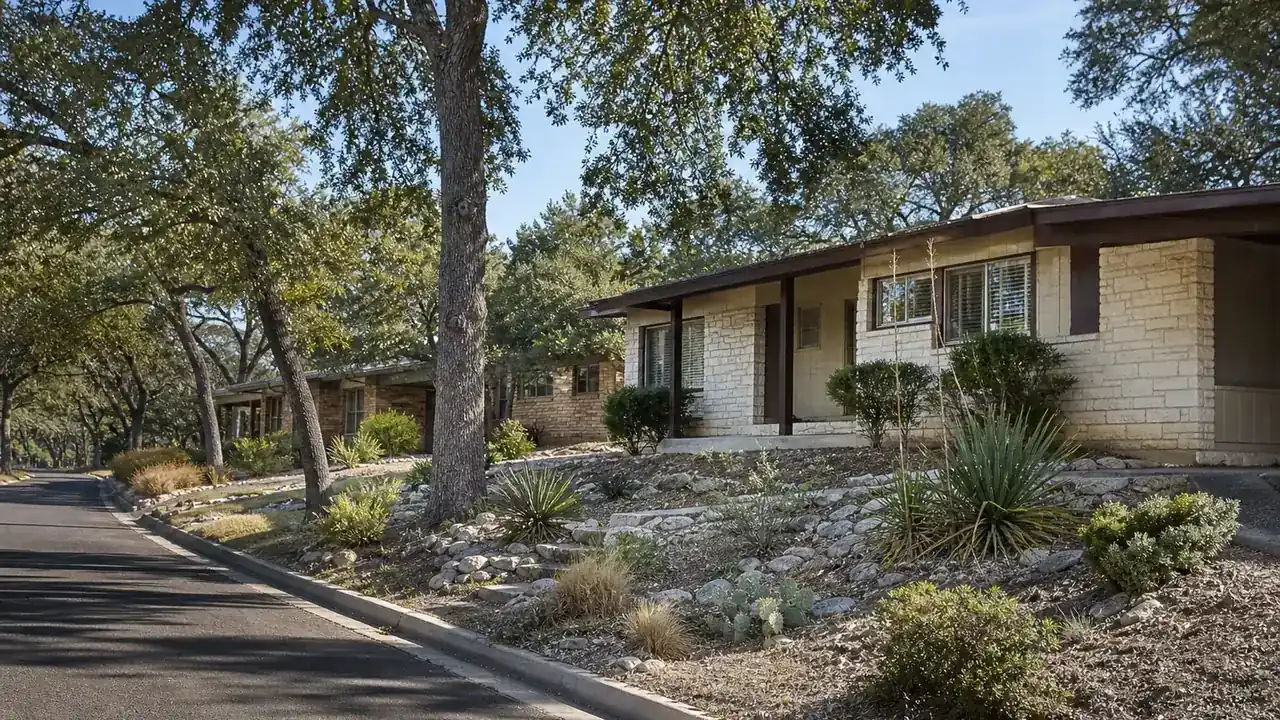
Is your house on piers or a slab?
Look at the bottom of an outside wall. Skirting, a small vent or an access door with a dark space behind it means the floor sits on piers and beams over a crawl space. If the brick or siding stops a few inches above a concrete edge and the floors inside feel hard and dead flat, the house is on a slab.
Both are common here. Austin's housing is young overall: the median home was built in 1994, and 43% of units are from 2000 onward (U.S. Census ACS 2020–2024). Raised wood floors turn up more often in the older stock: 28% of Austin's housing predates 1980, and 8% predates 1960. A pier and beam house can usually be re-leveled from the crawl space, while a settled slab has to be lifted from piers set into the ground beneath it.
Which signs mean an Austin house needs foundation repair?
- Doors that stick or stop latching, though they closed fine last spring.
- Drywall cracks climbing from the corners of doors and windows.
- Stair-step cracks in brick or stone outside, or a gap opening where the masonry meets a window frame.
- Floors that slope, dip or bounce, or baseboards lifting away from the floor.
- A crack running across tile or stained concrete that gets wider each year.
One sign by itself in August may ease after the fall rains. Several together, or one that keeps growing, deserve a closer look. The plain guide to what each sign usually means walks through each one.
Pick the page that matches your house
- Pier and beam foundation repairBouncy or sloping raised floors: shims, new piers, and rotted sills and joists.
- Slab foundation repair and house levelingSettled corners, cracked tile and sticking doors on a slab: piers, lifting and drainage.
- Foundation crack repairHairline, stair-step and widening cracks: which to watch, seal or have assessed.
- Foundation repair cost guide for AustinSlab, pier and beam and crack repair ranges from named 2026 national guides.
Reading the signs and the ground
- Austin's clay and limestone, east and westWhat the state geologists and the soil survey say about the ground under Austin homes.
- What a crack or sticking door usually meansCommon signs, answered one by one, with the repair page each one points to.
Clay to the east, limestone to the west
Austin is split by the Balcones fault zone, a band of northeast-running faults that the Texas state geological survey maps through the west side of the city. Most of those faults drop the ground on their east side, about 1,000 feet in total across the zone (Bureau of Economic Geology). Texas A&M AgriLife's Travis County office describes I-35 as the rough line between the Edwards Plateau, with thin soil over limestone, and the Blackland Prairie, where deep clays shrink and swell.
That clay has a famous name. Houston Black, the classic expansive clay of the Texas prairies, has its official type location in Travis County, and as it dries it opens cracks up to 4 inches wide and a foot or more deep (USDA NRCS). A slab or pier resting in it rises when the soil is wet and drops when it dries out. West of the fault line, rock near the surface gives firmer support, though hillside lots and loose fill bring trouble of their own. The guide to Austin's clay and limestone goes further.
Hot summers, wet Mays and Octobers
Camp Mabry averages 36.25 inches of rain a year, but it comes unevenly. May is the wettest month at about 5 inches and October is close behind, while July gets under 2 inches and the high reaches 100°F or more on about 29 days a year (NOAA 1991–2020 normals). The clay around a foundation therefore swells in spring, shrinks hard through summer, and swells again in fall. That cycle is why many Austin cracks open in August and partly close by winter, and why a sound repair plan covers gutters, grading and steady soil moisture as well as piers.
How a request works
Austin Foundation Solutions is an independent local resource. This site sorts out what you are seeing and what fixing it tends to cost; nobody here levels floors or sets piers. Send a request and it goes to one independent foundation specialist who serves Austin. That specialist phones you, hears what you have found, and books a visit if you want one.
Two checks before you sign. The City of Austin exempts only small foundation repairs, up to 128 square feet, from a building permit, so ask who will pull the permit for anything larger. If an engineer's report is part of the job, you can look the engineer up in the public roster kept by the Texas Board of Professional Engineers and Land Surveyors.
Questions homeowners ask
How much does foundation repair cost in Austin?
National guides put most projects at $2,200–$8,200 (Fixr, 2026) or $2,224–$8,134 (This Old House, 2026). Fixr lists pier and beam repairs at $2,000–$15,000 and slab repairs at $1,000–$10,000. The Austin foundation repair cost page lists each method with its source.
My cracks open every summer and close in winter. Is that a foundation problem?
It is the clay moving, and some seasonal movement is normal on expansive soil. What matters is the trend. Pencil a mark and a date at each end of the crack in August and again in February. If it grows from one year to the next, or doors stop closing in every season, have it looked at.
Can a pier and beam floor be leveled from underneath?
Usually, yes. With enough crawl space to work in, a specialist can add or replace shims, set new piers under sagging beams, and repair rotted sills or joists, all from below. Only when the perimeter beam itself has settled does the job start to look like slab work.
Is the first visit free?
It depends on the company. Many local specialists don't charge for the first visit; ask when they call, before they come out.
Sources
- U.S. Census Bureau, American Community Survey 2020-2024: year structure built, Austin city
- Bureau of Economic Geology: Geologic Map of the Austin West Quadrangle, Travis County (GQ-38)
- USDA NRCS soil series description for Houston Black
- NOAA NCEI U.S. Climate Normals 1991-2020 (station Austin-Camp Mabry, USW00013958)
- City of Austin: Work Exempt from Building Permits
Tell us what has moved
A sloping floor, a door that stopped latching, a crack that keeps growing: describe it and say which room. One independent foundation specialist serving Austin will phone to hear more and find a time to come by.